Slip past a weathered doorway in Bangkok and suddenly, the city disappears. Fifteen thousand kilometres away and nearly a century back in time, a hidden world of 1940s Havana comes alive behind an unmarked door. This is Havana Social, one of Bangkok’s most iconic cocktail bars, and one of the city’s most immersive feats of exquisite speakeasy interior design.
Conceived by award-winning Bangkok studio Soho Hospitality, Havana Social is not merely a bar. It is a love letter to a lost era: the golden, decadent 1940s of pre-revolutionary Cuba, jazz-soaked streets of 1940s Havana, when Havana was the pleasure capital of the Caribbean and luminaries like Marlon Brando, Ernest Hemingway, and Rita Hayworth rubbed shoulders in smoky cabarets and high-stakes casinos. Understanding that history is essential to understanding the space itself, because every material, every surface, every prop has been deliberately chosen to tell that story.
One of the most impressive aspects of Havana Social is how the design team has incorporated distinctly different spatial experiences within a single venue, each with its own personality, material palette, and atmosphere, while maintaining total conceptual cohesion.
Some of these pillars include:
Nostalgic – recreating ambience through designed objects, vintage posters, retro props, and layered detail that encourages guests to travel back in time. Like a vinyl record player or a rotary telephone, each element contributes to a coherent, emotionally resonant whole.
Vintage – integrating design elements that reflect the culture and lifestyle of pre-revolution Havana, evoking warmth and intimacy. Antique furniture, framed paintings, stained glass, and handcrafted tiling weave a time capsule around the guest experience.
Distressed – capturing Havana’s signature weathered charm through deliberate finish choices. Crumbling plaster, vibrant faded colours, and aged facades do not signal neglect, they signal history. They tell stories without words.
This three-pillar framework is emblematic of how Soho Hospitality approaches concept-driven interior design for hospitality: every aesthetic choice is purposeful, and every layer of detail reinforces the brand story from the moment a guest steps through the door.
The Concept: When Havana Was a Glittering Gem
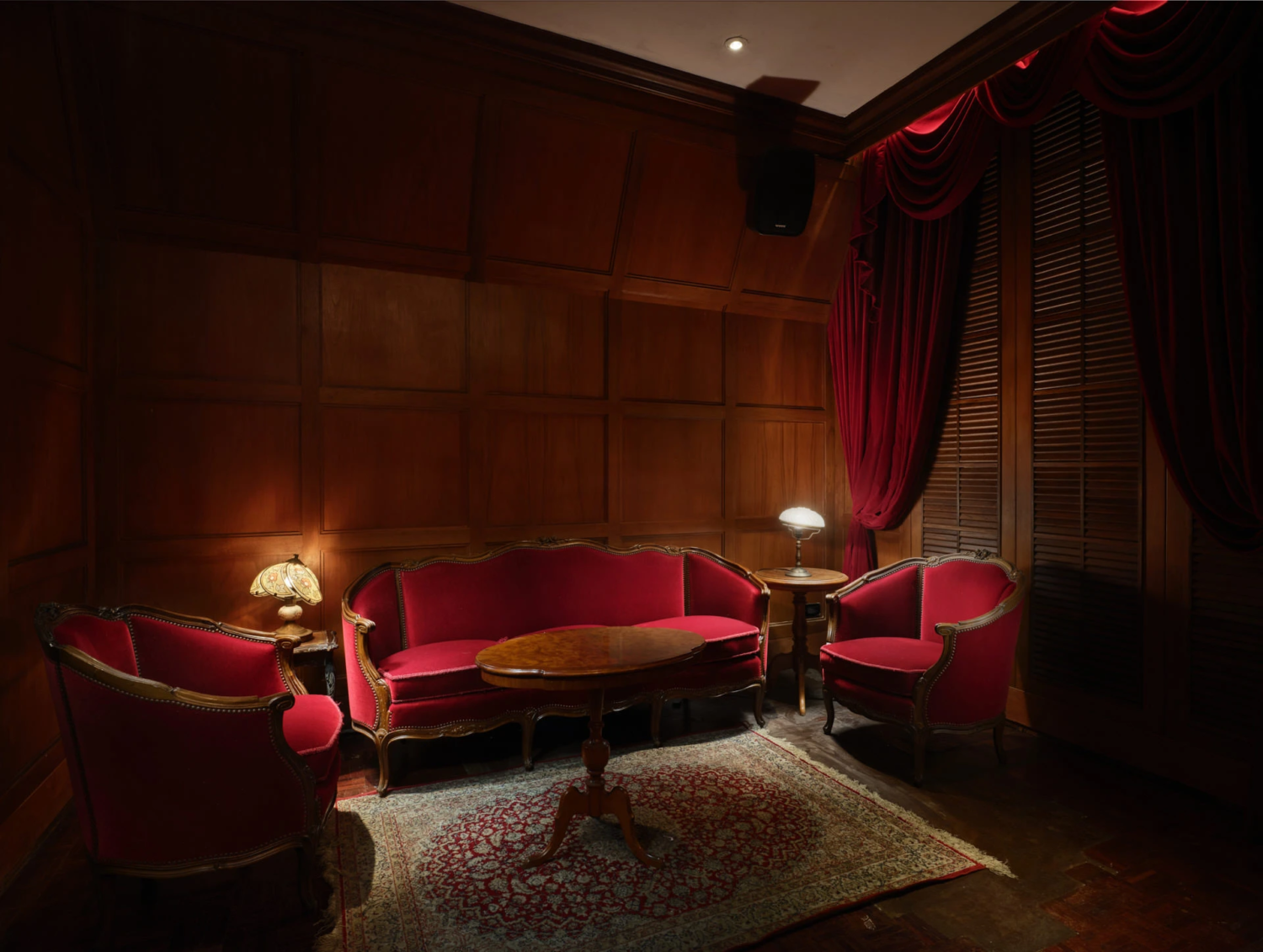
Soho Hospitality’s design team conducted deep research into the cultural, historical, and architectural fabric of Havana before a single material was specified. The result is a venue concept grounded in carefully defined design pillars that guide every decision from floor finish to furniture selection. The idea for Havana Social was to recreate the charged social atmosphere of Cuba before Fidel Castro’s 1959 revolution brought the party to an abrupt end. That was an era of glamorous nightclubs like the Tropicana, of celebrity gamblers, and dazzling live entertainment, a moment where class boundaries blurred on the dance floor and the city radiated an electric, cosmopolitan energy. Rather than conjuring a pastiche of that world, Soho Hospitality set out to make it feel genuinely lived-in.
The Arrival: Theatre From the First Step
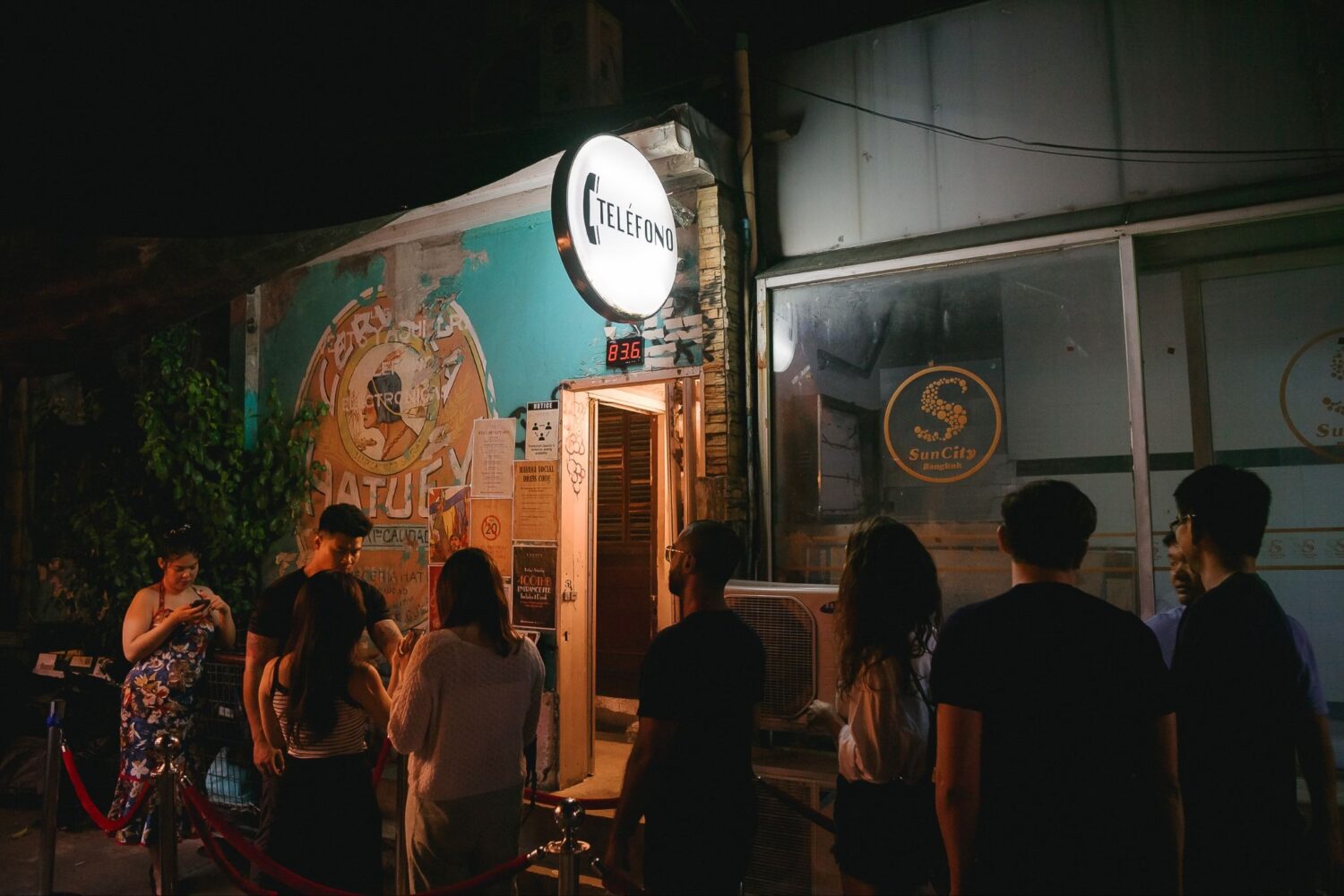
The entrance to Havana Social is a masterclass in experiential design. There is no polished foyer, no glittering signage. Instead, guests arrive at a Cuban street corner: a hand-painted mural covers a wall in vibrant teal, the paint cracked and weathered as though decades of tropical humidity have had their way with it. A battered vintage payphone booth waits at the entrance, scratched with age and heavy with secrets. Somewhere beyond it lies Havana Social, but the door only opens to those trusted with the code, whispered discreetly by the guards outside. Graffiti tags, the kind that accumulate on walls that nobody bothers to maintain, complete the illusion.
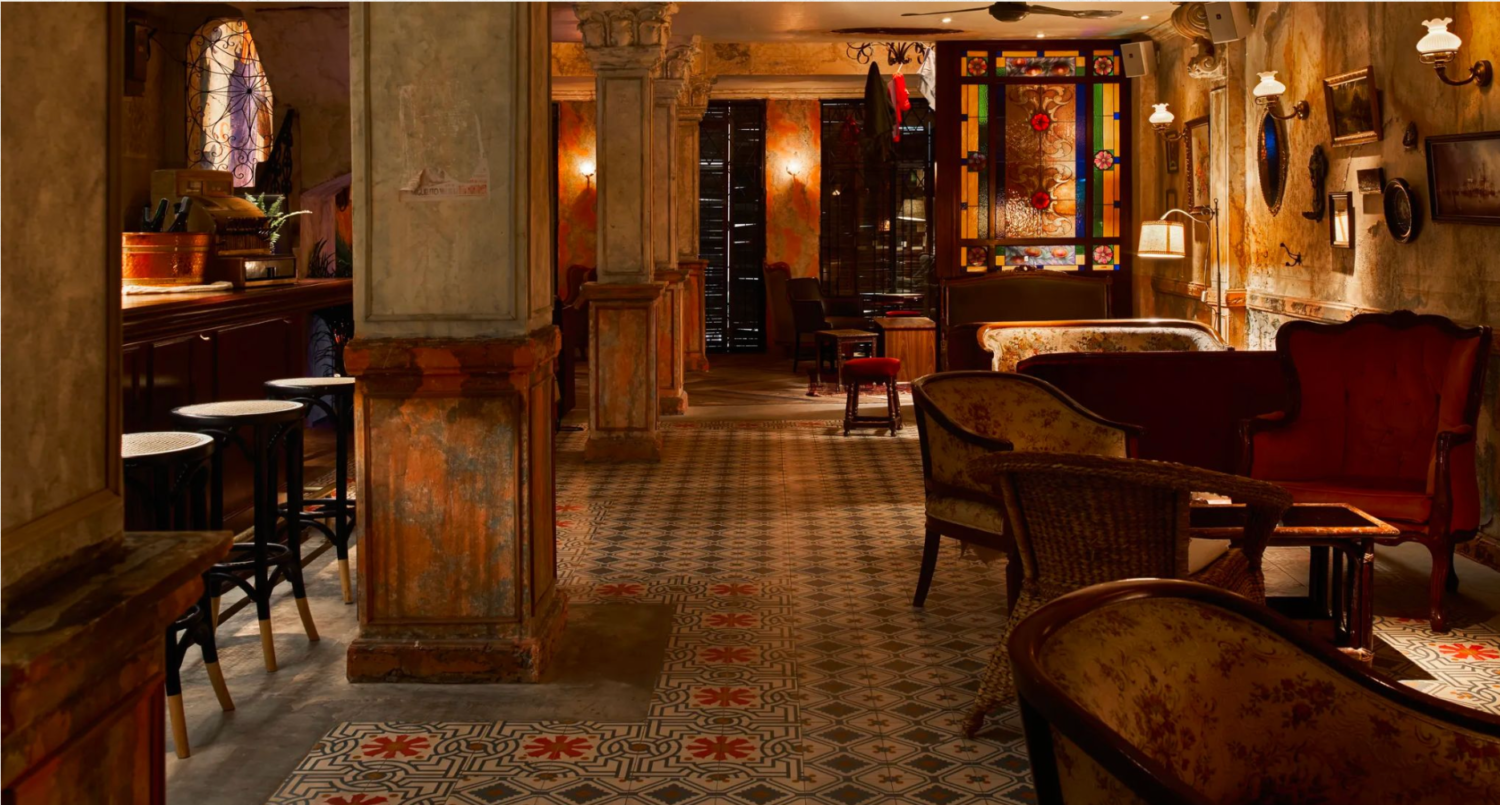
This arrival sequence is entirely intentional. Soho Hospitality’s approach to the “arrival experience” concept borrows from speakeasy culture, where discovering the door is part of the pleasure and where the transition from the outside world to the interior world should feel like crossing into another dimension of time. By the time guests push through into the bar proper, they are primed to believe in the fiction the designers have created.
The Lounge Room
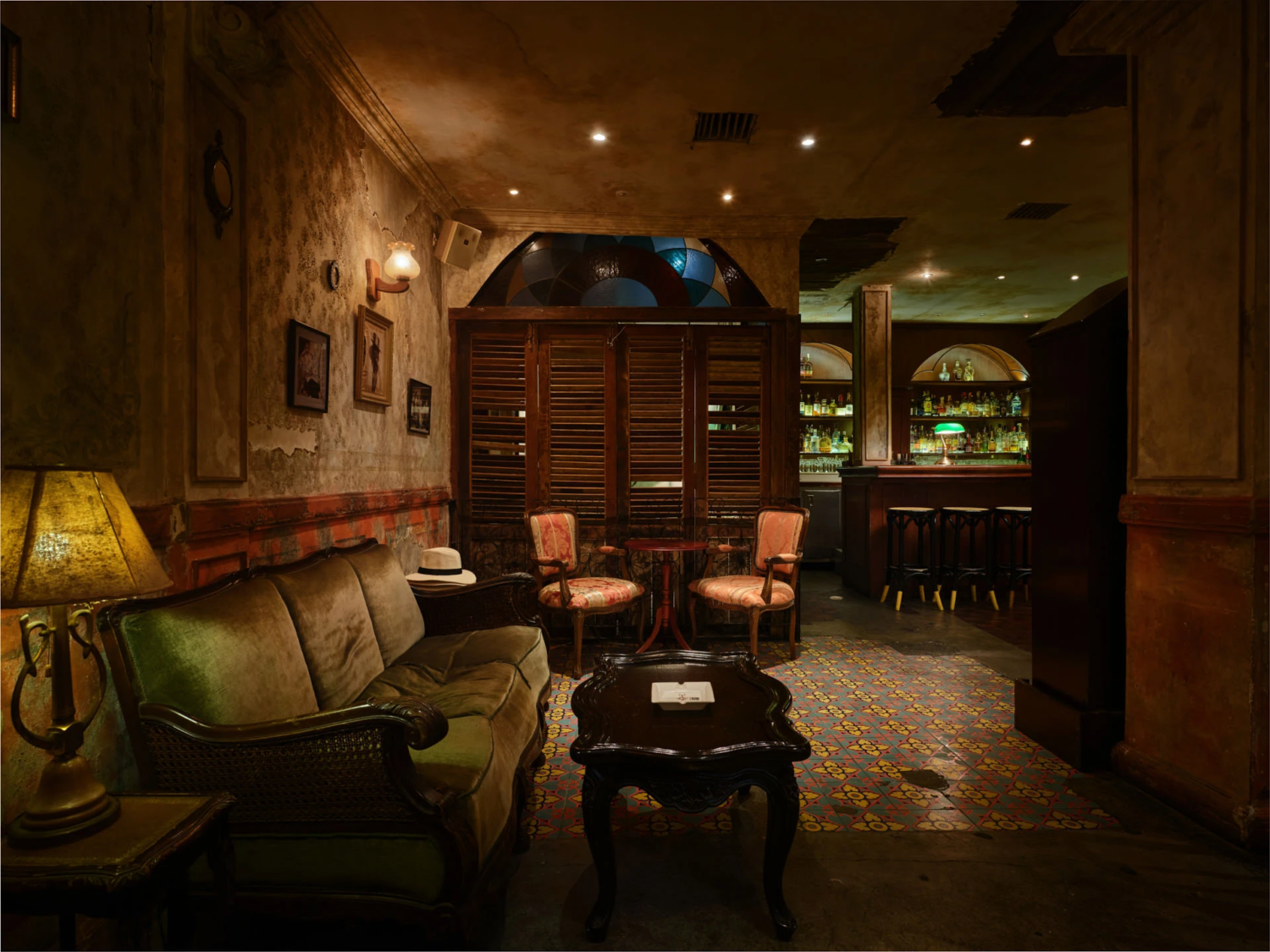
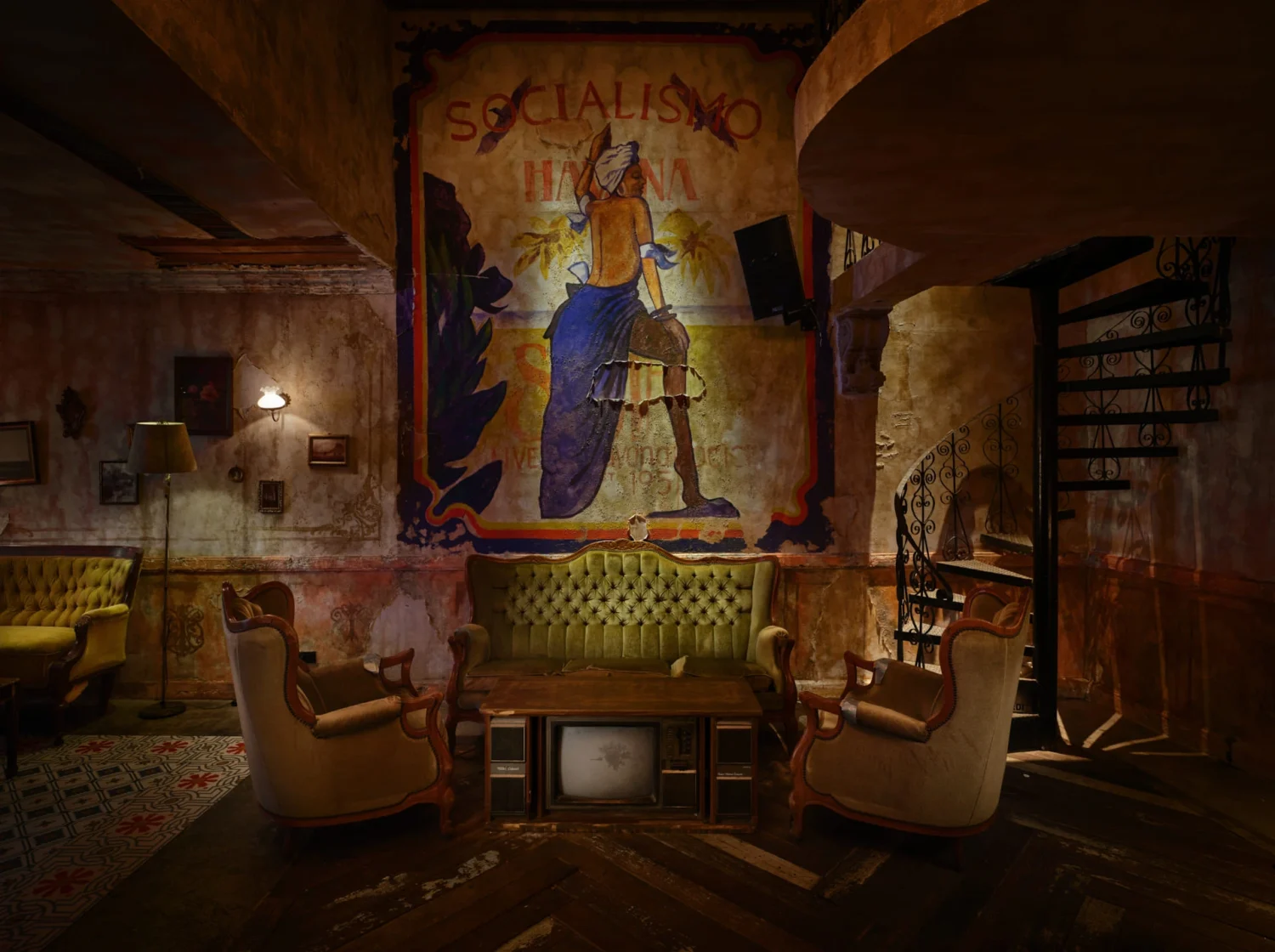
Hidden on the second floor of Havana Social, this room is the perfect lounge and has the feels of old Havana preserved in time. Weathered plaster walls, aged timber detailing, and dim amber lighting create an atmosphere thick with nostalgia and quiet decadence. Vintage armchairs upholstered in faded velvet sit beside dark carved wood tables, inviting guests to linger over conversations and cocktails deep into the night. Patterned Cuban-style tiles spill across the floor, while distressed shutters and portraits that add layers of authenticity to the space. Every detail, from the worn leather sofa to the low golden glow of antique lamps, has been carefully curated to evoke the intimate glamour of a 1940s Havana hideaway, where conversations stay private and time seems to stand still.
The Interior: Distressed Grandeur
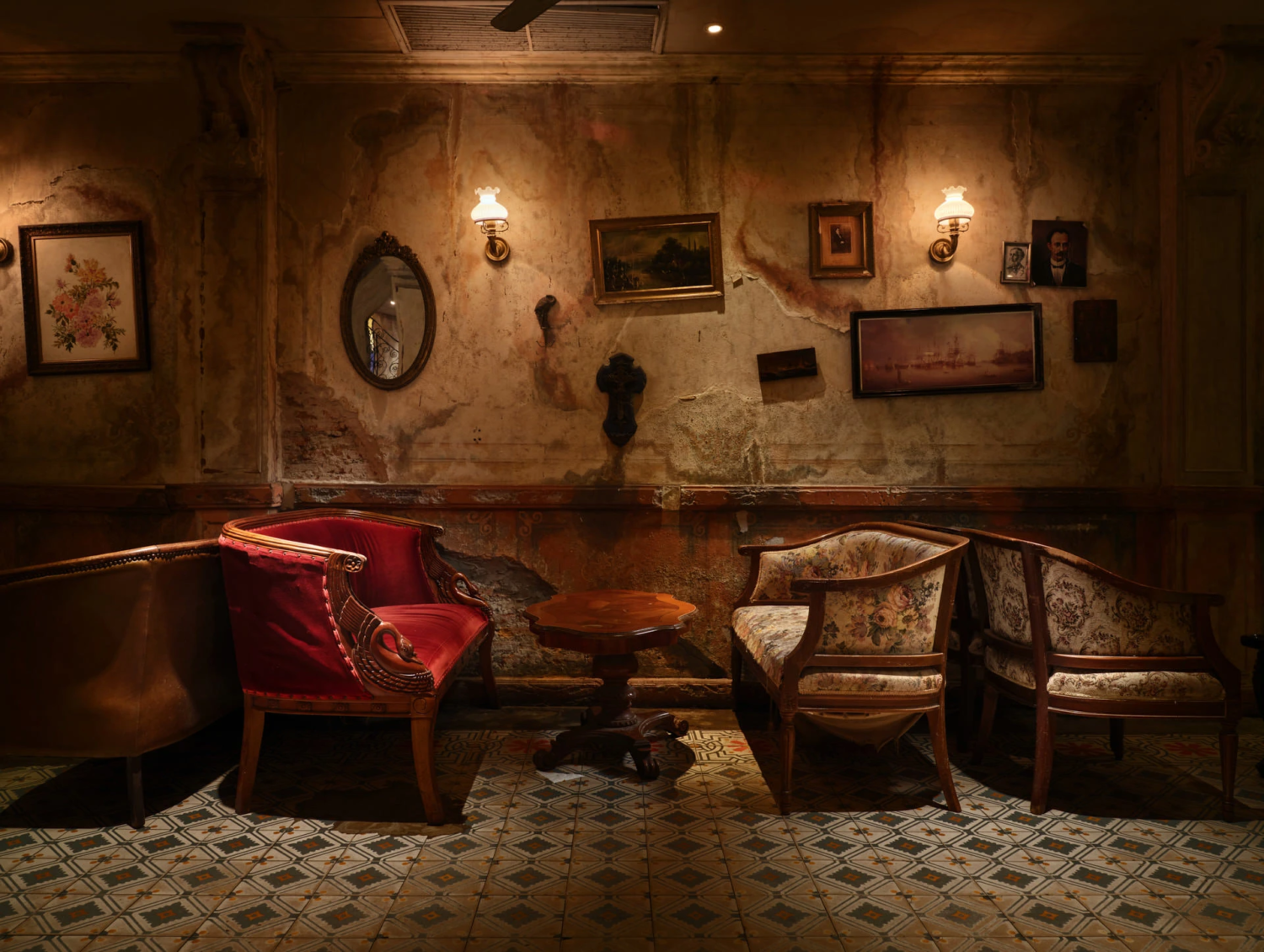
The main floor of Havana Social is where the design truly unfolds in all its layered complexity. The space has the feel of a once-grand colonial building that has been left to the mercies of time, which is exactly the aesthetic the team was aiming for.
Walls are finished in textured, distressed plaster painted in warm russet and amber tones, streaked and patchy as though decades of salt air and neglect have done their work. In places, the plaster appears to be actively crumbling, revealing brick beneath. This “distressed” pillar of the design philosophy is central to Havana Social’s authenticity: distressed finishes on Cuban buildings evoke a unique charm and sense of place, capturing the city’s rich history and resilience in a way that pristine surfaces never could.
Antique ceramic floor tiles, geometric and patterned in the Spanish colonial tradition, stretch across the floor, their faded reds and creams forming an intricate tapestry underfoot. In different zones, these give way to wood parquet, Persian rugs, and areas of honed stone, creating a patchwork of surfaces that feels organically accumulated rather than designed. Overhead, vintage ceiling fans turn slowly in the amber light.
The Feature Bar: Theatrical Heart of the Venue
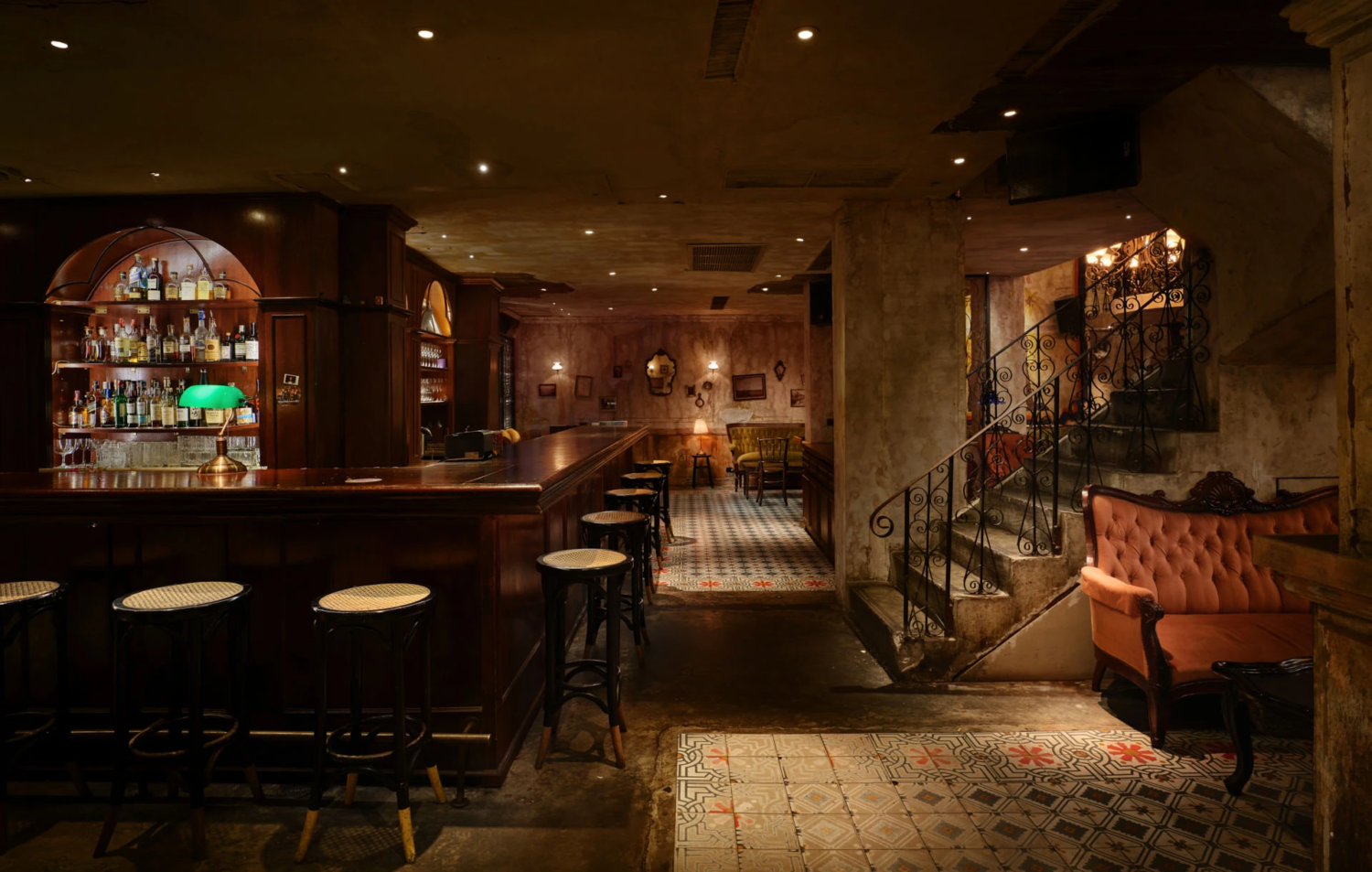
The feature bar is arguably the visual centrepiece of Havana Social. Designed with a dramatic arched back-bar reminiscent of the grand hotel bars of old Havana, it is lined floor-to-ceiling with spirit bottles that glow warmly under arched lighting recesses. The woodwork is rich and dark, mahogany and teak tones rendered in solid timber joinery, with brushed bronze hardware catching the light.
The bar counter itself is a working prop as much as a functional surface, its surface worn and patinated to suggest decades of use. Green-shaded banker’s lamps cast pools of warm light at intervals, a detail lifted directly from the gambling rooms and private clubs that defined pre-revolutionary Havana’s nightlife. The overall effect is of a bar that has been serving cocktails since before Castro was born, exactly the intention.
El Presidente: The VIP Sanctum
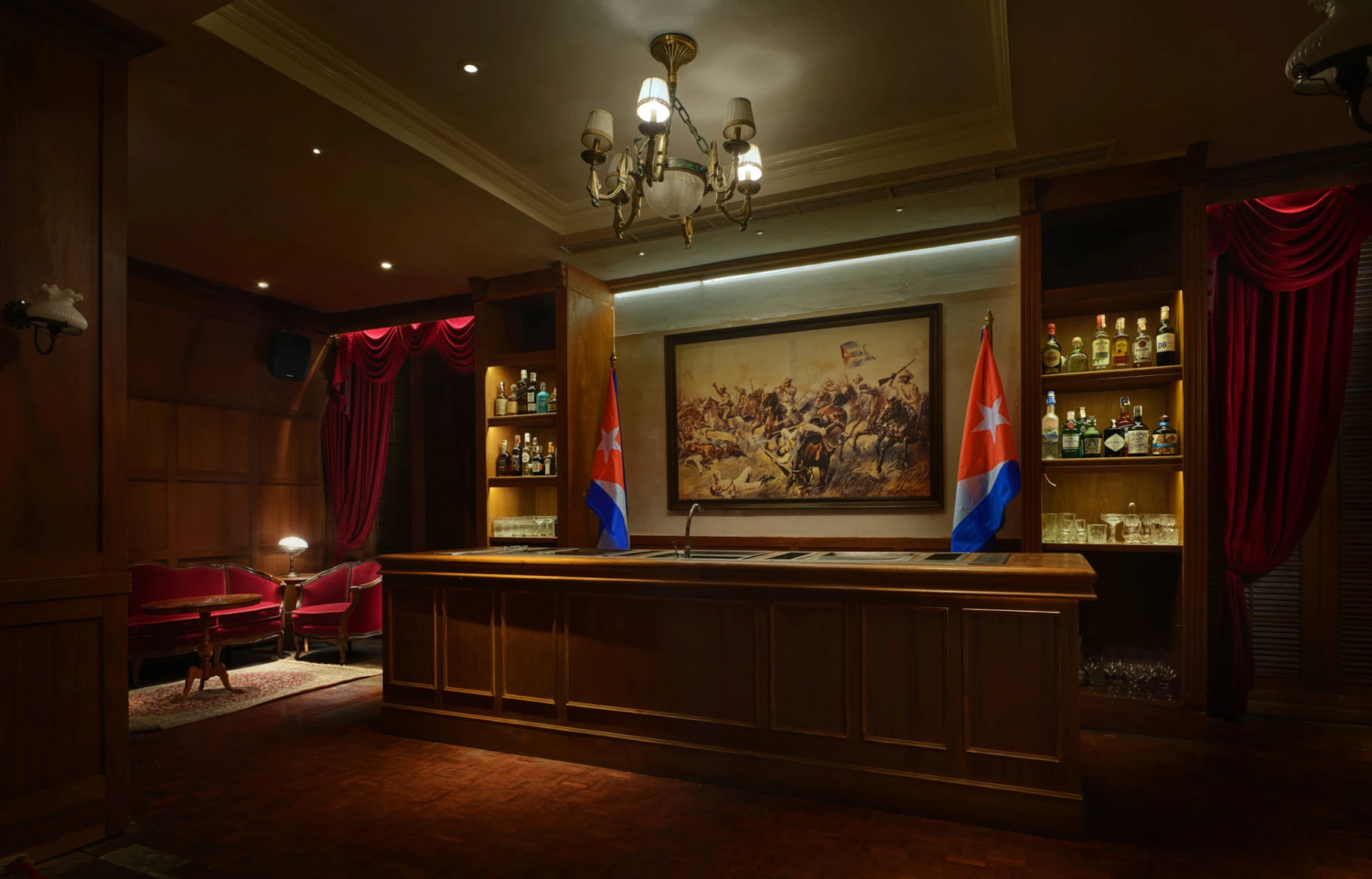
Off the main floor lies El Presidente, Havana Social’s exclusive VIP nook, and if the main bar evokes a glamorous public saloon, this space channels something altogether more intimate: a private gentleman’s club at the height of Cuba’s golden age.
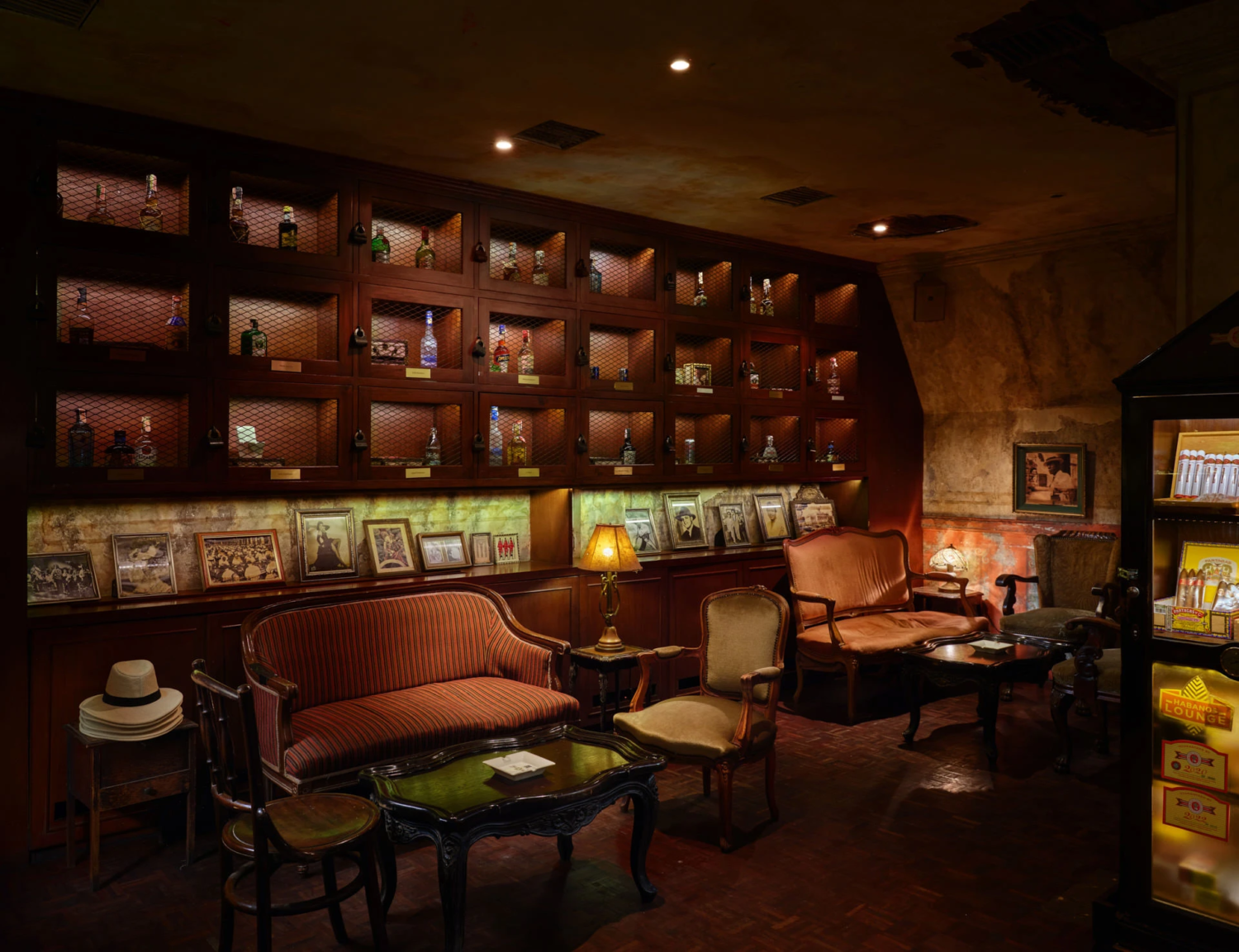
Seating here consists of deep-buttoned Chesterfield armchairs in aged cognac leather and velvets, arranged around low tables on richly patterned Persian rugs. Floor-to-ceiling bookshelves, filled with leather-bound volumes in the muted tones of a well-aged library, line the walls, lit by desk lamps with fringed lampshades that throw warm amber light across the spines. Dark teak joinery cabinets with bronze wire mesh panels serve both as display cases and architectural elements, their craftsmanship a deliberate nod to the kind of bespoke furniture that once filled Havana’s elite private clubs.
Materials and Finishes: Where the Story Lives
A significant part of Havana Social’s power as a designed space lies in the extraordinary specificity of its material palette. Soho Hospitality’s material board for the project reads like an inventory of a beautiful colonial mansion.
Upholstery is equally considered, the vintage-style sofas and armchairs evoke the parlour rooms of mid-century Cuba, while leather accents on bar seating and the Chesterfields in El Presidente ground the space in a more masculine register. Sheer curtains at the outdoor cabanas soften the tropical courtyard, while cast iron fencing and patterned glass details in the bathroom corridor maintain the period atmosphere even in transitional spaces.
Nothing here is accidental. Even the vintage posters, the antiquities, the retro props, are curated as narrative devices, layered together to build what the designers call Havana Social’s “unique character.”
The Music and Atmosphere
Design in hospitality never exists in isolation, and at Havana Social the spatial design is matched by equally deliberate programming of music and atmosphere. Cuban live bands and DJ sets animate the performance area, positioned to energise the main floor while allowing the quieter corners and El Presidente room to maintain their more intimate character. The total seating configuration reflects a sophisticated understanding of the different social registers a venue like this must accommodate simultaneously.
Soho Hospitality’s Design Philosophy in Practice
Havana Social is perhaps the clearest expression of Soho Hospitality’s guiding principle: that truly great hospitality design must be rooted in authenticity, historical research, and what they call “excruciating attention to detail and accuracy.” Our company, founded in Bangkok in 2010, distinguishes itself by not only designing venues but owning and operating them, giving them an unusually practical understanding of how a designed space must function operationally as well as aesthetically.
The six pillars of their philosophy, authenticity, inspiration, practicality, creativity, sustainability, and viability are all visible at Havana Social. The authenticity is evident in the specificity of every reference, from the Hatuey beer mural at the entrance to the Chesterfields in El Presidente. The inspiration comes directly from the cultural, historical, and architectural heritage of a very specific place at a very specific moment in time. And the practicality is visible in a floor plan that balances high-energy entertainment zones with quieter, more intimate seating configurations.
A Venue That Bangkok Won’t Forget
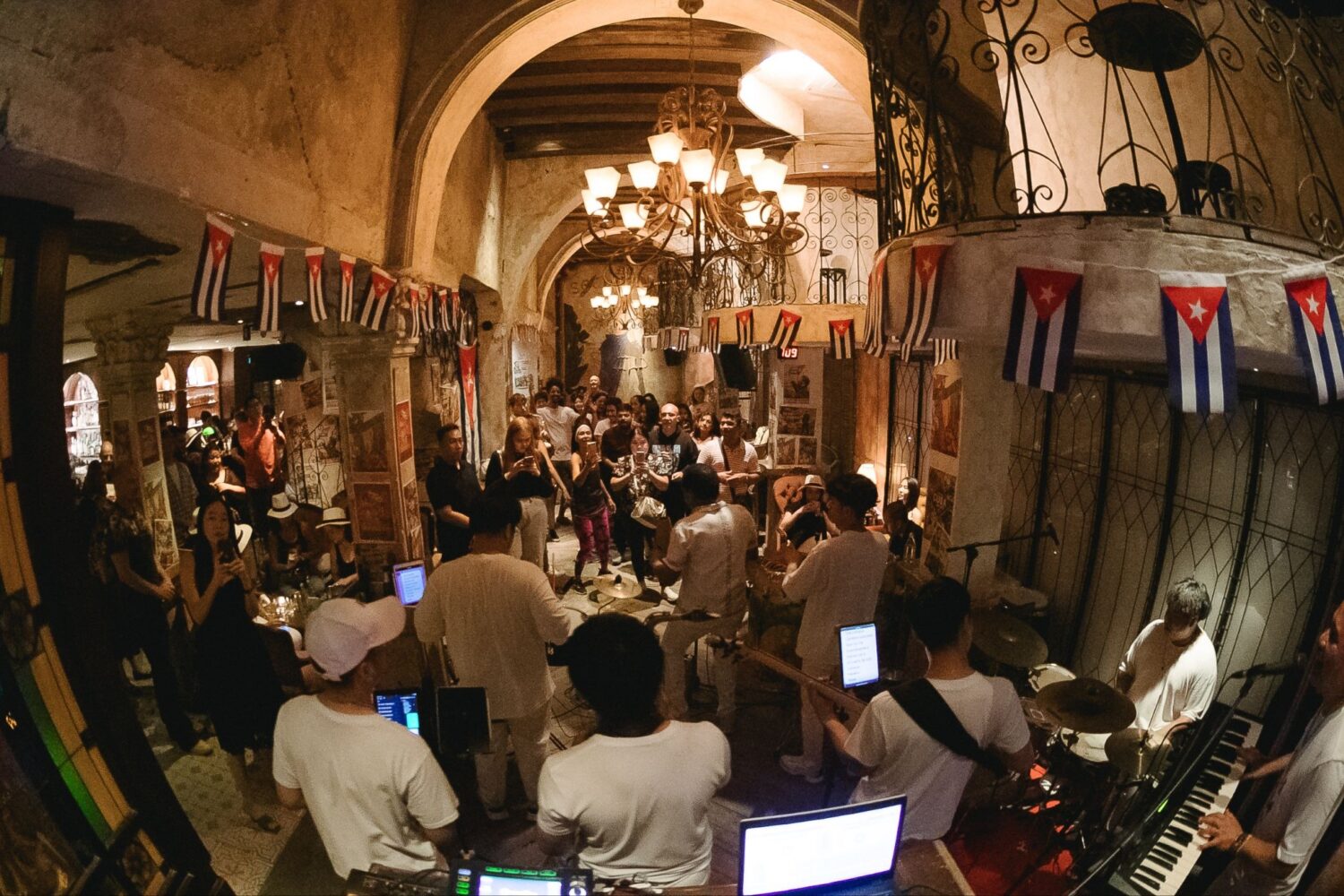
In a city of extraordinary bars and restaurants, Havana Social occupies a rare position: a venue that is genuinely, almost inexplicably, convincing in its evocation of another world. The worn tiles underfoot, the stained glass, the amber light, the cozy back-bar, the tufted leather chairs, the sound of a live band drifting through distressed plaster walls, together they create an experience that is as much about place and time as it is about cocktails.
That, ultimately, is what makes Havana Social Bangkok a benchmark for themed hospitality design. It doesn’t feel themed. It feels discovered.
Service provided by Soho Hospitality.
Photo credits: Christopher O’Grady.