A bold new restaurant concept fusing the raw energy of Japanese street pop culture with the timeless ritual of fireside grilling.
When most people think of a Japanese restaurant, a familiar image forms almost instantly, lanterns, dark wood, hushed reverence, perhaps a chef in a white headband, and biker gangs gathering over drinks on the rocks. The aesthetic has become so embedded in global dining culture that walking into yet another conventional Japanese restaurant feels less like an experience and more like a déjà vu. That predictability is exactly the problem that Yankii was designed to obliterate.
Conceived by Soho Hospitality, Yankii Robatayaki & Bar is a two-floor F&B destination that reimagines the traditional Robatayaki dining experience through the chaotic, expressive lens of Japanese street pop culture, specifically, the rebellious subculture of the Yankii themselves.
What Is Robatayaki, And Why Does It Need Reinventing?
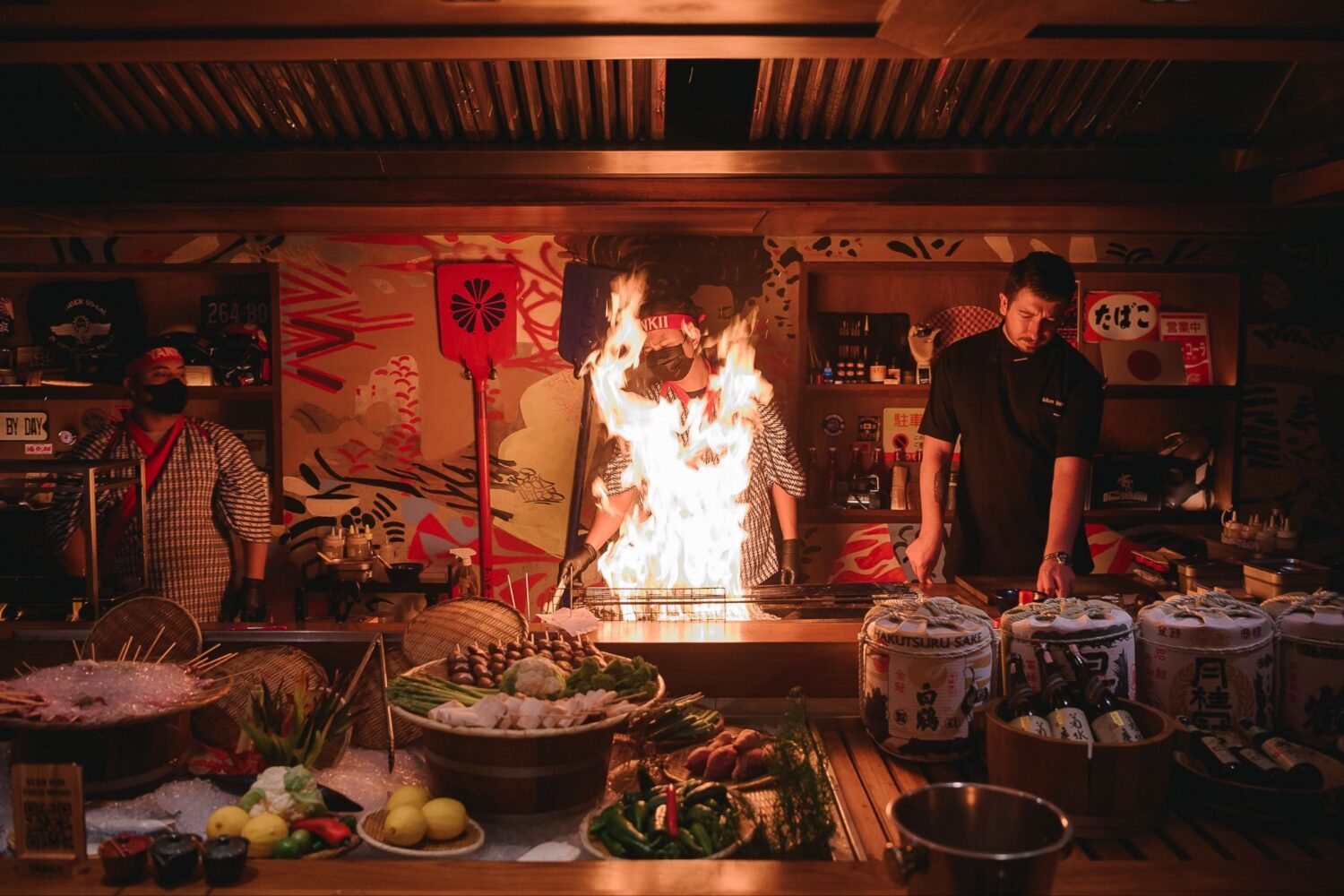
Robatayaki (炉端焼き), which translates loosely as “fireside cooking,” is one of Japan’s most communal and theatrical dining traditions. Originating in the fishing villages of northern Japan, it centers on a large open hearth where chefs grill fresh ingredients, fish, vegetables, meat, and serve them to guests seated around the counter, often using long wooden paddles to pass dishes across the fire.
It is, at its core, an experience built on proximity, theatre, and seasonal ingredients. Yet outside Japan, the format has become somewhat formulaic: the warm woods, the calligraphy scrolls, the reverent atmosphere. It delivers exactly what diners expect, while still being full of surprises and chaos.
Yankii asks a different question: what happens when that tradition is taken over by a new generation that refuses to follow the rules?
Introducing the Yankii: Japan’s Rebel Sons and Daughters
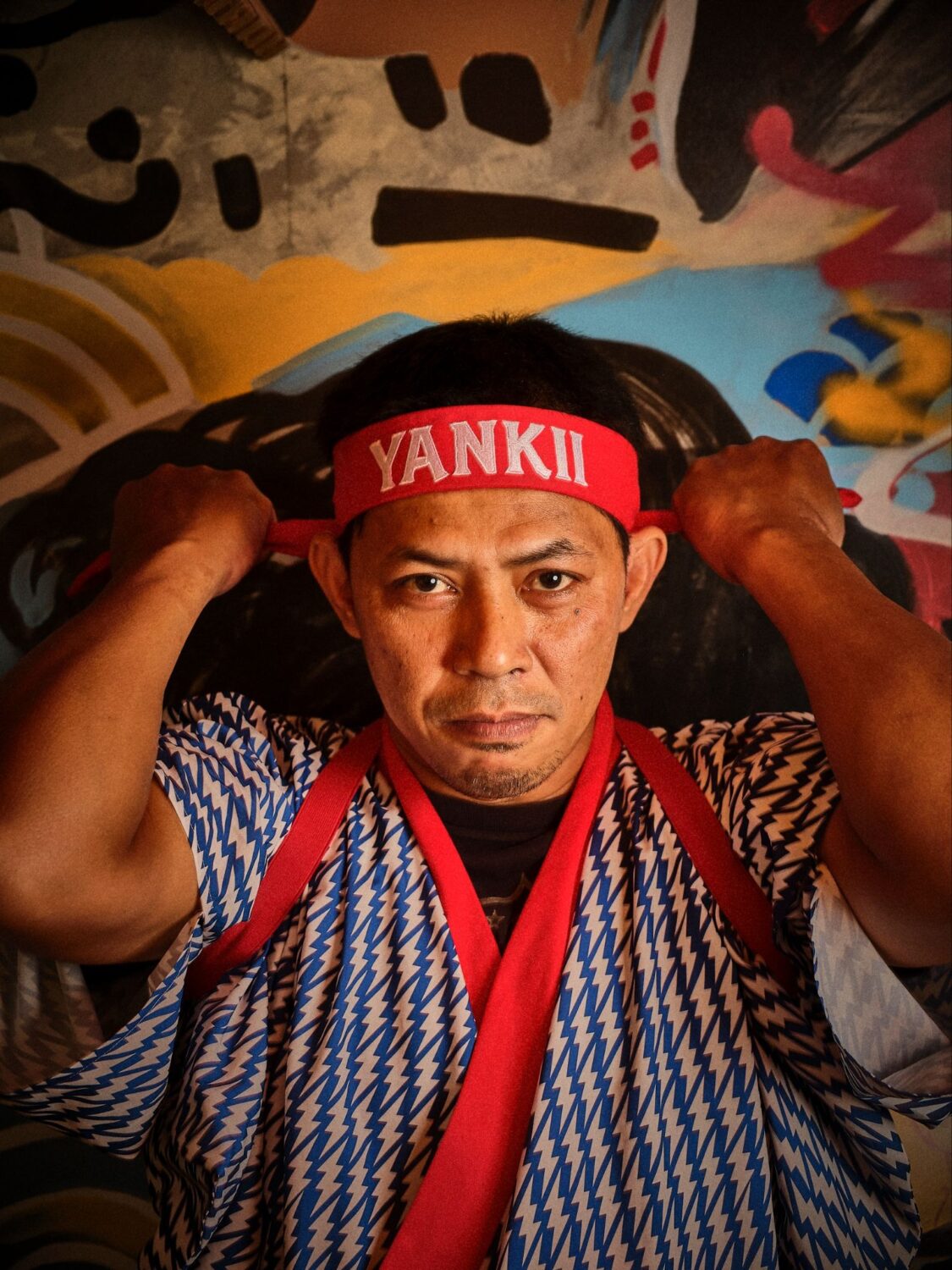
The Yankii subculture (ヤンキー, pronounced yahn-kee) emerged in Japan from the mid-1980s through the early 1990s as a form of youth rebellion against the country’s notoriously rigid social expectations. Inspired in part by American postwar culture, young Yankii distinguished themselves through dramatically styled hair, elaborately customized uniforms known as tokkō-fuku (特攻服), biker gang affiliations, and an unashamed rejection of conformity.
What makes the Yankii visually compelling, and conceptually rich for a restaurant design, is the tension at the heart of the culture: it is deeply, almost obsessively, Japanese, while simultaneously subverting everything that word is assumed to represent. Yankii fashion borrowed heavily from traditional Japanese motifs, chrysanthemums, kanji slogans, but rendered them in oversized, loud, deliberately excessive ways. It was tradition turned up to eleven.
This is the creative DNA that runs through every design decision at Yankii the restaurant.
The Concept: A Generational Takeover
The narrative underpinning the Yankii concept is elegantly simple: the Dagashi bar and Robatayaki establishment, once run by the older generation, has been handed down, or perhaps seized, by their children. The new owners are Yankii. And they’ve redecorated.
This generational handover becomes the storytelling device that allows old and new to coexist without apology. The traditional bones of the space remain, the robata counter, the wooden joinery, the paper lanterns, but they’ve been layered, tagged, and reimagined by a generation that sees beauty in loudness and poetry in provocation. It’s wabi-sabi for the punk era.
The result is an interior design language that feels simultaneously nostalgic and disruptive. Japanese dagashi shop aesthetics, the cluttered, candy-colored, chaotic warmth of those beloved neighbourhood sweet shops, collide with Yankii iconography, neon signage, graffiti-style murals, and the high-energy visual density of Tokyo street life.
Interior Design: A Deep Dive into the Yankii Aesthetic
The Arrival Experience
First impressions at Yankii are designed to signal immediately that this is not your average Japanese restaurant. The entry sequence draws from the visual grammar of Tokyo’s public spaces, the bold typography of train station signage, the red of a corner post box, the directional chaos of a Shibuya crosswalk rendered in graphic form.
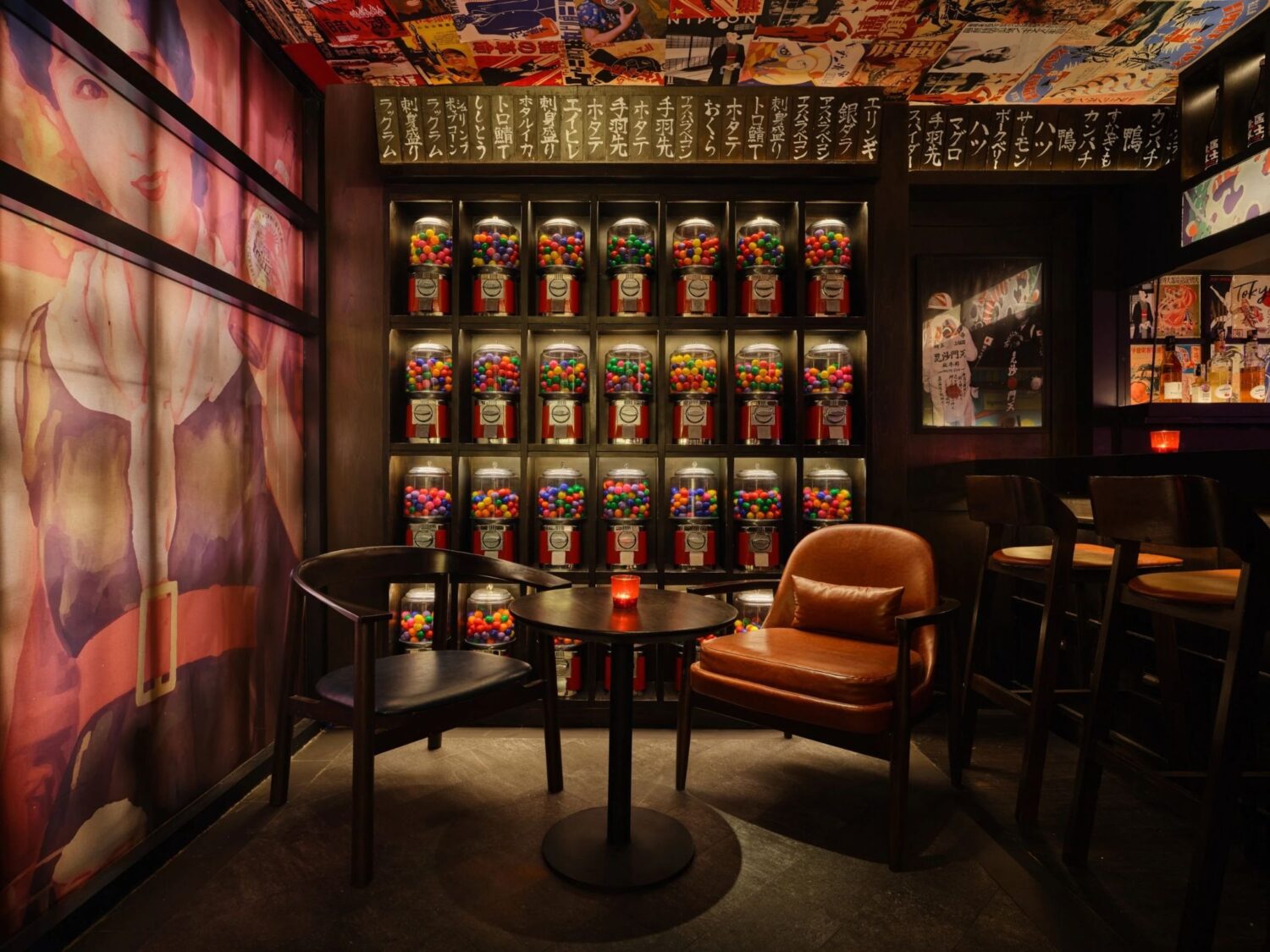
Lanterns, a traditional fixture in Japanese hospitality design, appear at the entrance, but here they are repurposed as typographic objects, spelling out the venue name in the manner of a Chanel Matsuri installation: high-low culture in a single gesture. Gachapon capsule toy machines line the approach, a playful nod to Dagashi culture and childhood nostalgia, bringing back the excitement of unexpected surprises. As a final touch to the experience, guests receive a token upon settling their bill, allowing them to turn the machine and discover a special mystery prize or souvenir before they leave, while a dramatic andon lantern anchors the facade.
The exterior draws from the layered, information-dense aesthetic of a Japanese arcade or covered shopping street, shotengai culture made architectural. It is welcoming and overwhelming in equal measure, which is precisely the point.
The Dagashi Bar (Ground Floor)
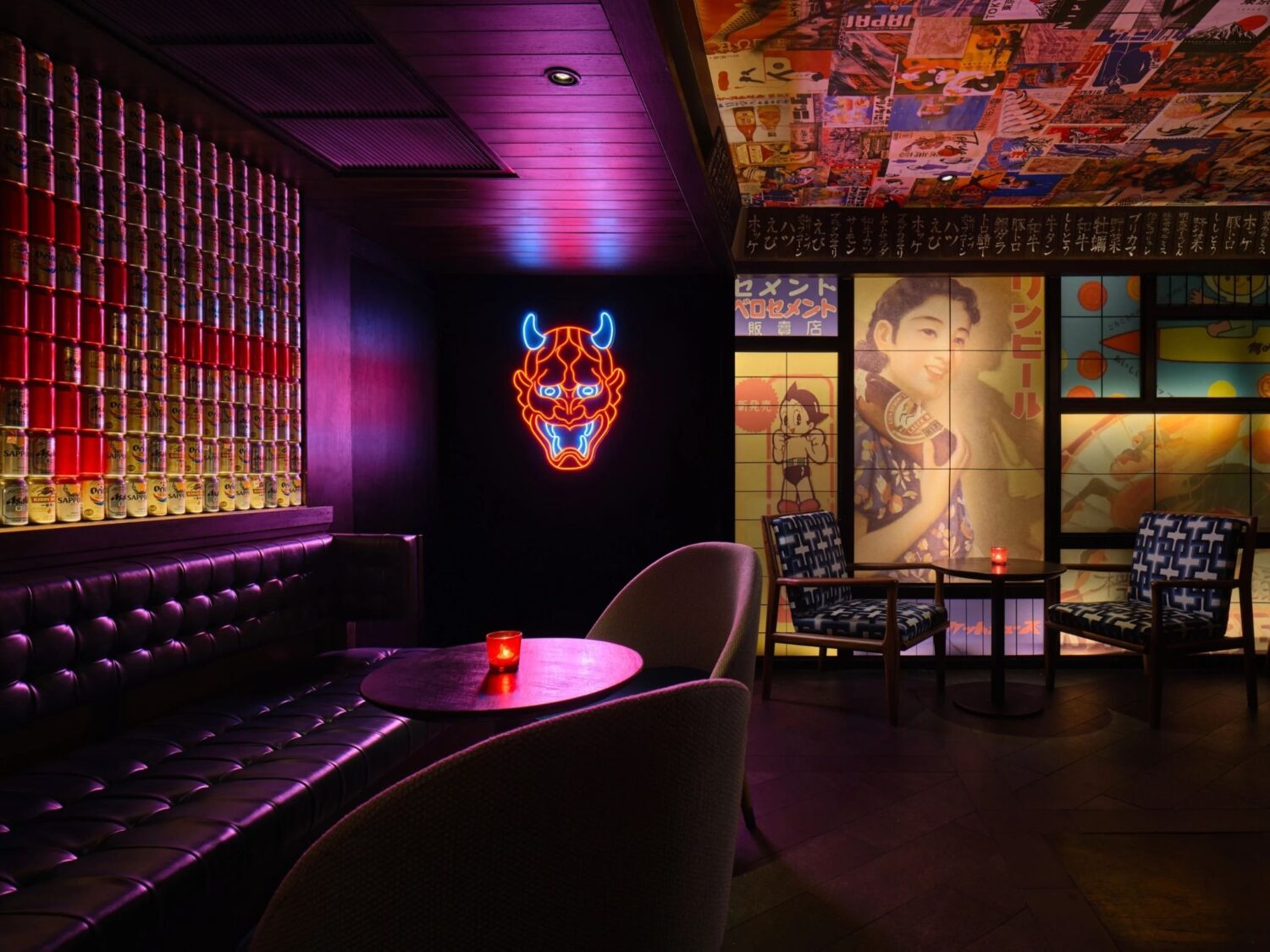
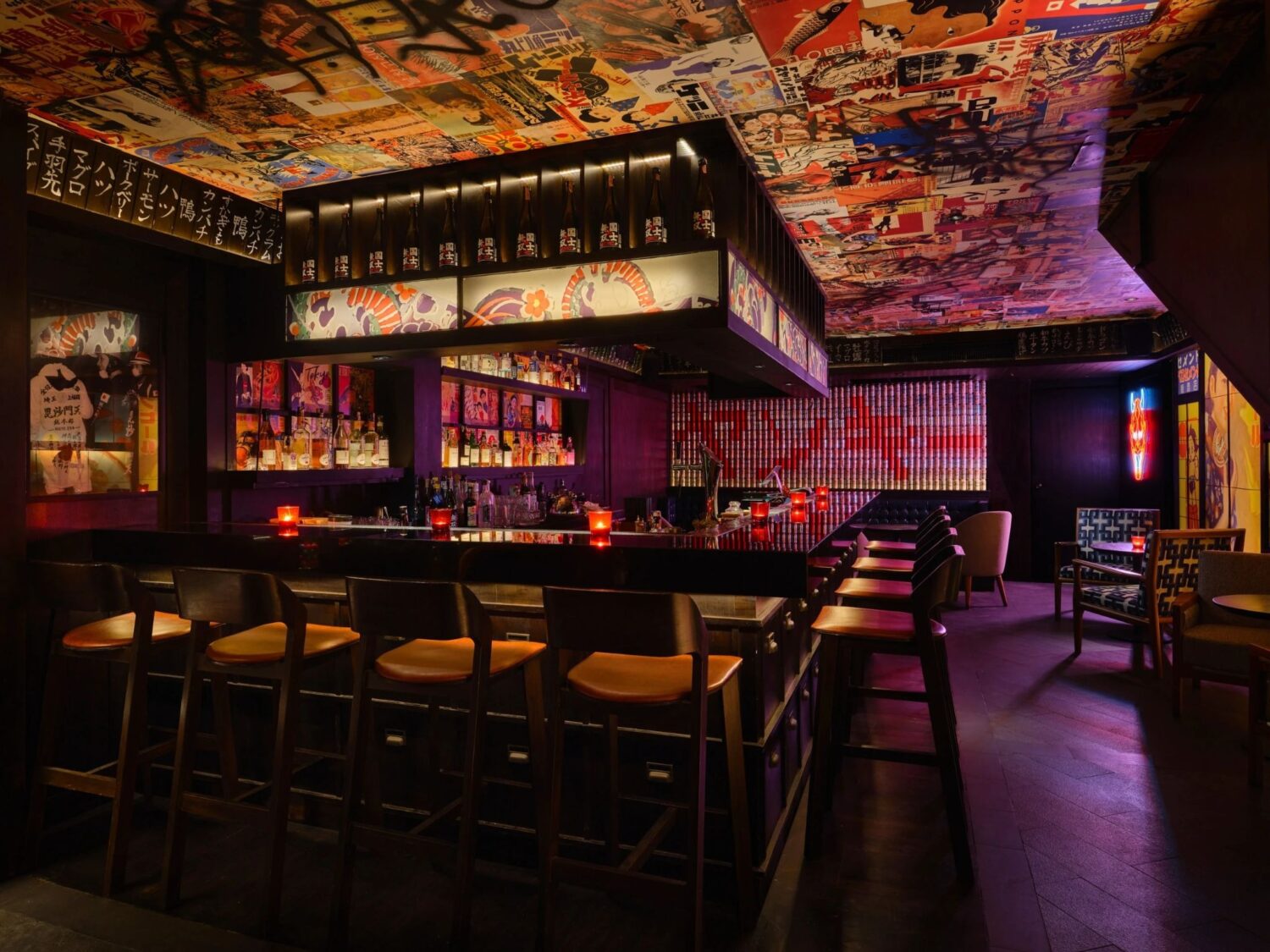
The ground floor Dagashi bar is where the Yankii personality is most fully expressed. The design palette here leans dark and intimate, charcoal walls, warm amber lighting, heavily textured surfaces, but every surface carries visual content.
The ceiling is treated as a canvas: covered in layered manga panels, retro advertisements, and Yankii-influenced graphic art, it creates the sensation of being inside a clubhouse that has been decorated over decades by successive generations of enthusiasts. This is maximalism with intention.
A floor-to-ceiling wall of stacked vintage Japanese beer and soft drink cans creates a striking feature wall, a wunderkammer of Japanese consumer culture that reads as art installation as much as decoration. Opposite, floor-to-ceiling shelving displays bottles, collectibles, and dagashi memorabilia, blurring the line between bar and shop.
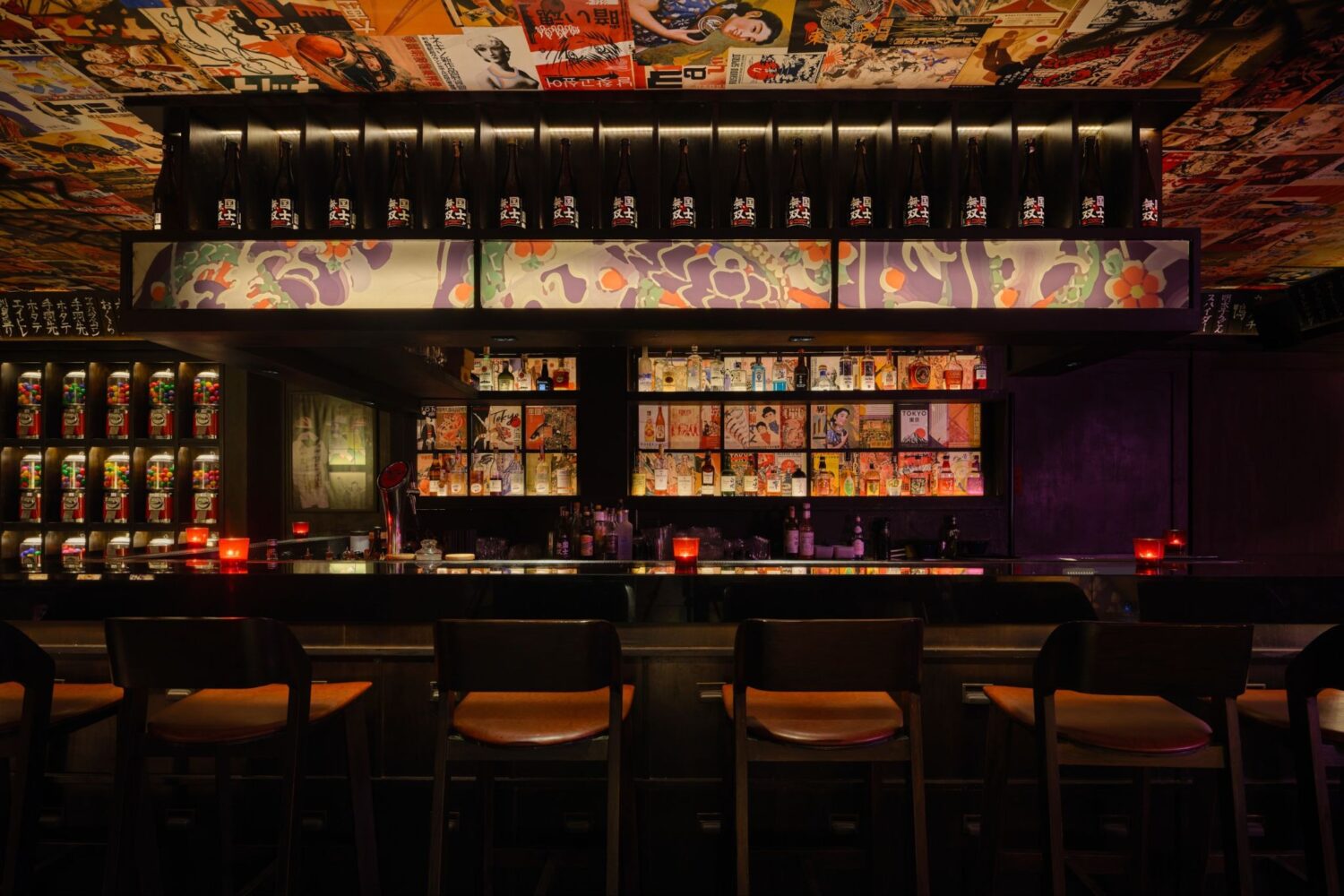
At the heart of the space, the bar counter anchors the room. Behind it, sake bottles are displayed beneath graphic panels inspired by Yankii tattoo art and traditional ukiyo-e prints that are inspired by street pop culture magazines and advertisements, the hannya mask rendered in neon glows red on one wall, an unmistakable symbol of passion and transformation.
The Staircase: Transition and Theatre
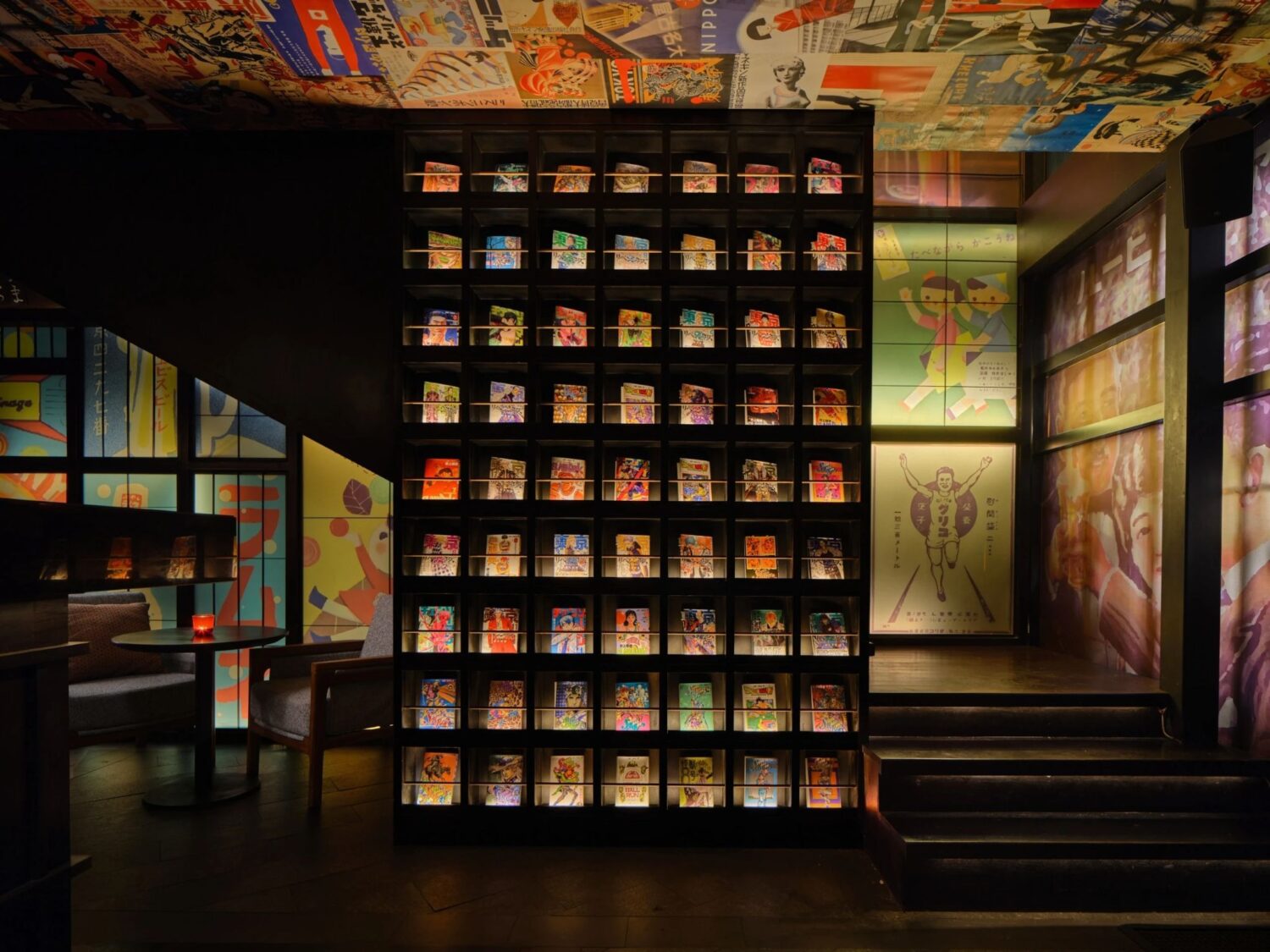
The staircase connecting ground and first floors is conceived as a transitional experience in its own right. A dramatic steel grid wall, backlit and filled with layered imagery, creates a sense of ascending through a living archive of Japanese visual culture. The glass balustrade keeps the structure light and contemporary, while the surrounding surfaces remain richly detailed.
Moving between floors is a journey from one world to another: from the intimate, izakaya-meets-underground-bar energy of the Dagashi space below, to the theatrical communal spectacle of the Robatayaki above.
The Robatayaki Restaurant (First Floor)
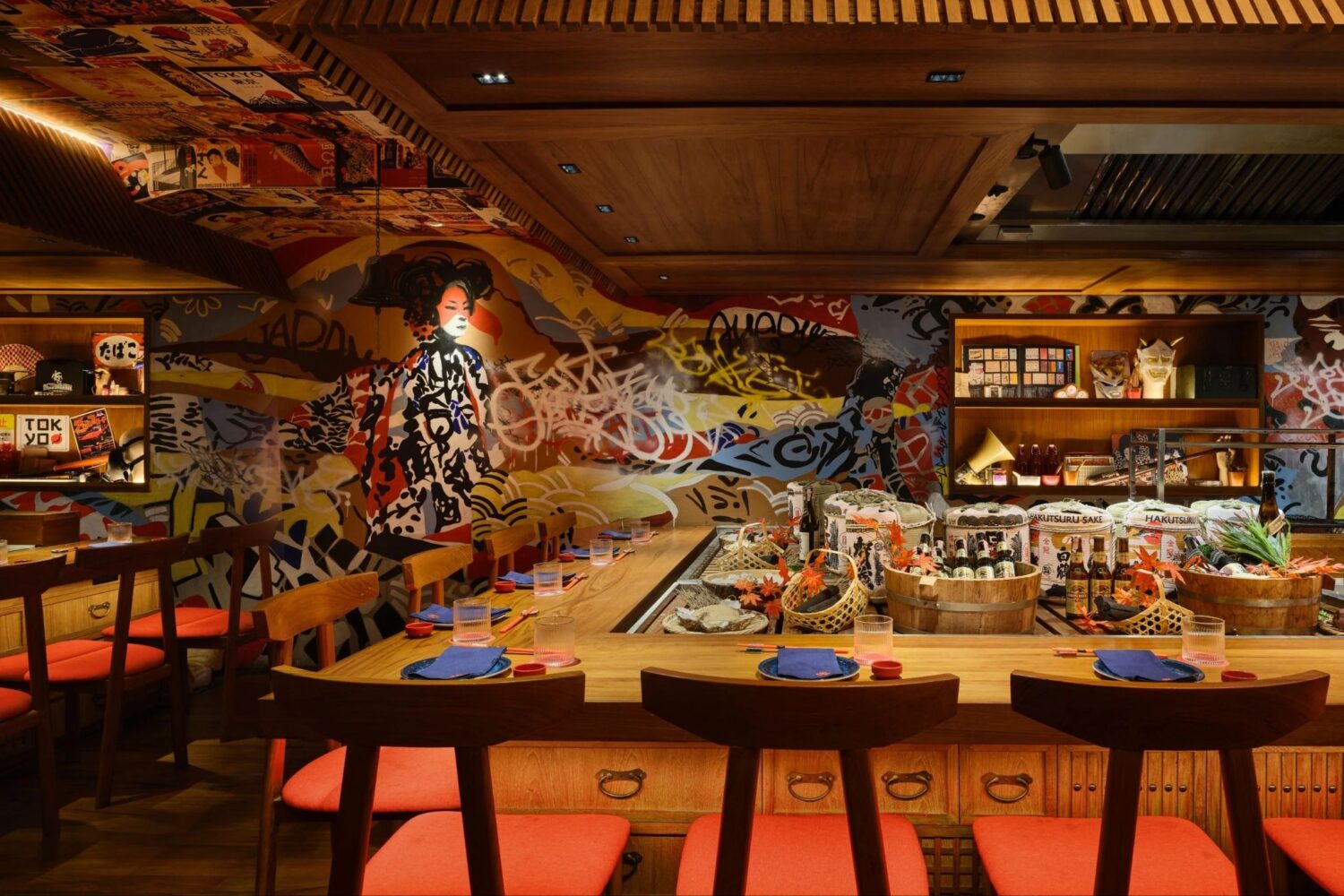
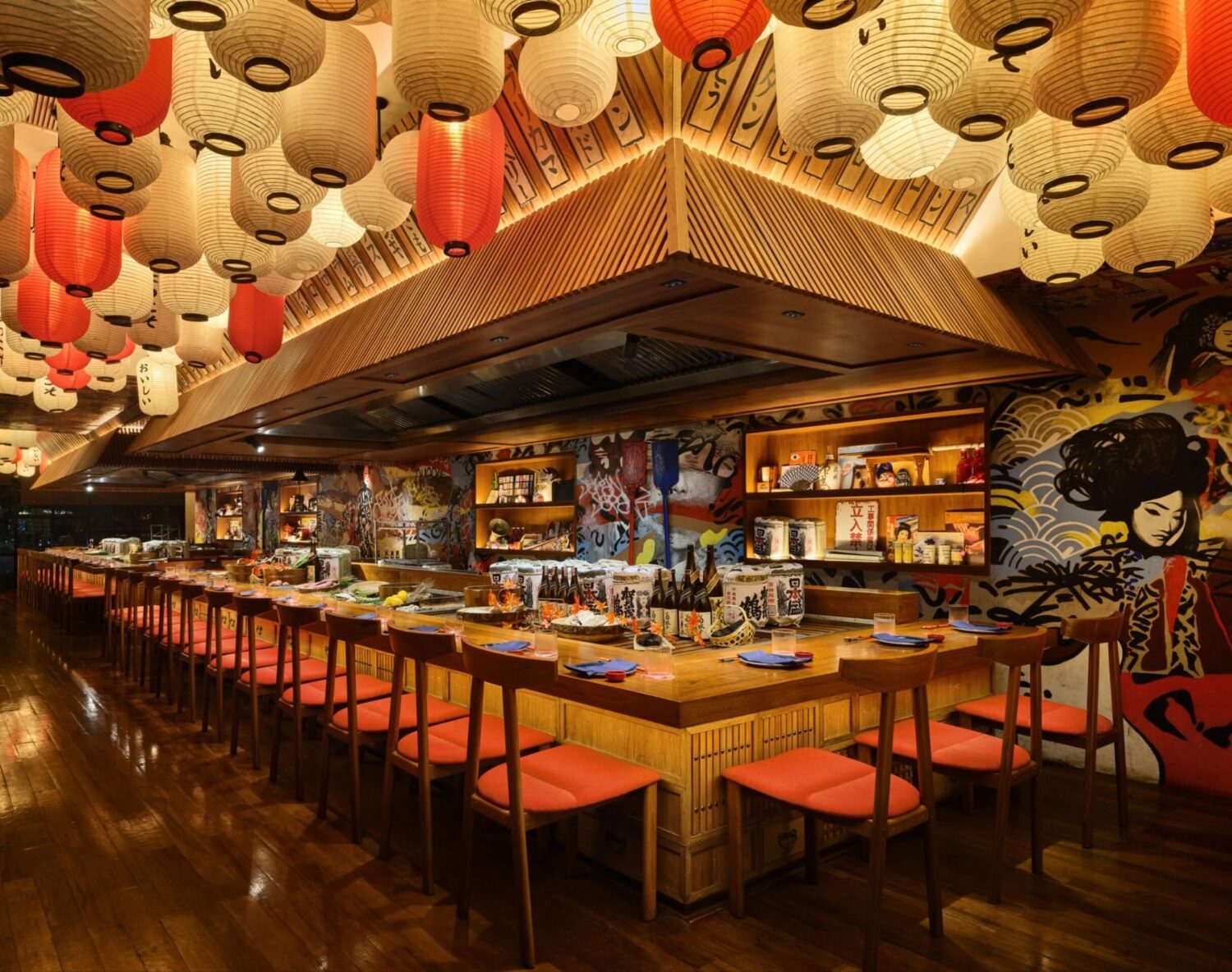
The upper floor is where the traditional Robatayaki format is honoured, and then gloriously complicated. Two parallel robata stations run the length of the space, seating 46 guests in a counter configuration that puts the cooking theatre front and centre.
Fresh ingredients are displayed on ice; the ritual of selection, grilling, and service unfolds in full view.
But the atmosphere here is anything but reverential. The ceiling is dense with paper lanterns, hundreds of them, in the traditional round form but bearing Yankii-inflected calligraphy and mon (family crests reimagined as gang insignia). The effect is of a festival that never ends, a matsuri frozen in amber above your head.
The walls of the Robatayaki floor play with traditional Japanese shoji screens, the sliding paper-and-timber panels that have defined interior design in Japan for centuries, but here the panels are backlit and layered with vintage poster art, manga imagery, and urban photography. They glow. They accumulate meaning. They feel alive.
A feature mural on the back wall takes the form of a large-scale, graffiti-influenced painting that combines geisha imagery with Yankii tags and contemporary street art techniques, a visual manifesto of the entire concept in a single surface.
Colour, Materials, and the Design Palette
The Yankii colour scheme is drawn directly from the culture it celebrates. The Yankii tokkō-fuku uniforms, those heavily embroidered coverall suits worn by gang members, provided the palette: a warm golden khaki as the dominant neutral, offset by bold primary accents of signal red, royal blue, military green, and crisp white. These are not subtle colours. They are the colours of flags, of protest, of identity asserted loudly.
Materials throughout the space are chosen to reflect the layering of old and new. Natural timber, in both pale Japanese hinoki and darker stained oak, provides warmth and continuity with Robatayaki tradition. Against this, raw concrete, blackened steel, and aged brass add industrial edge. Fabric selections for seating include indigo-dyed Japanese-weave patterns alongside teal velvet and brick-red textured upholstery, a material board that reads as eclectic, curated, and deliberately unsystematic.
Hardware details, pull handles, pins, and fixtures, reference oriental Japanese craft traditions in antiqued brass finishes, connecting the FF&E to the dagashi shop aesthetic of accumulated, treasured objects.
Music, Energy, and the Full Sensory Experience
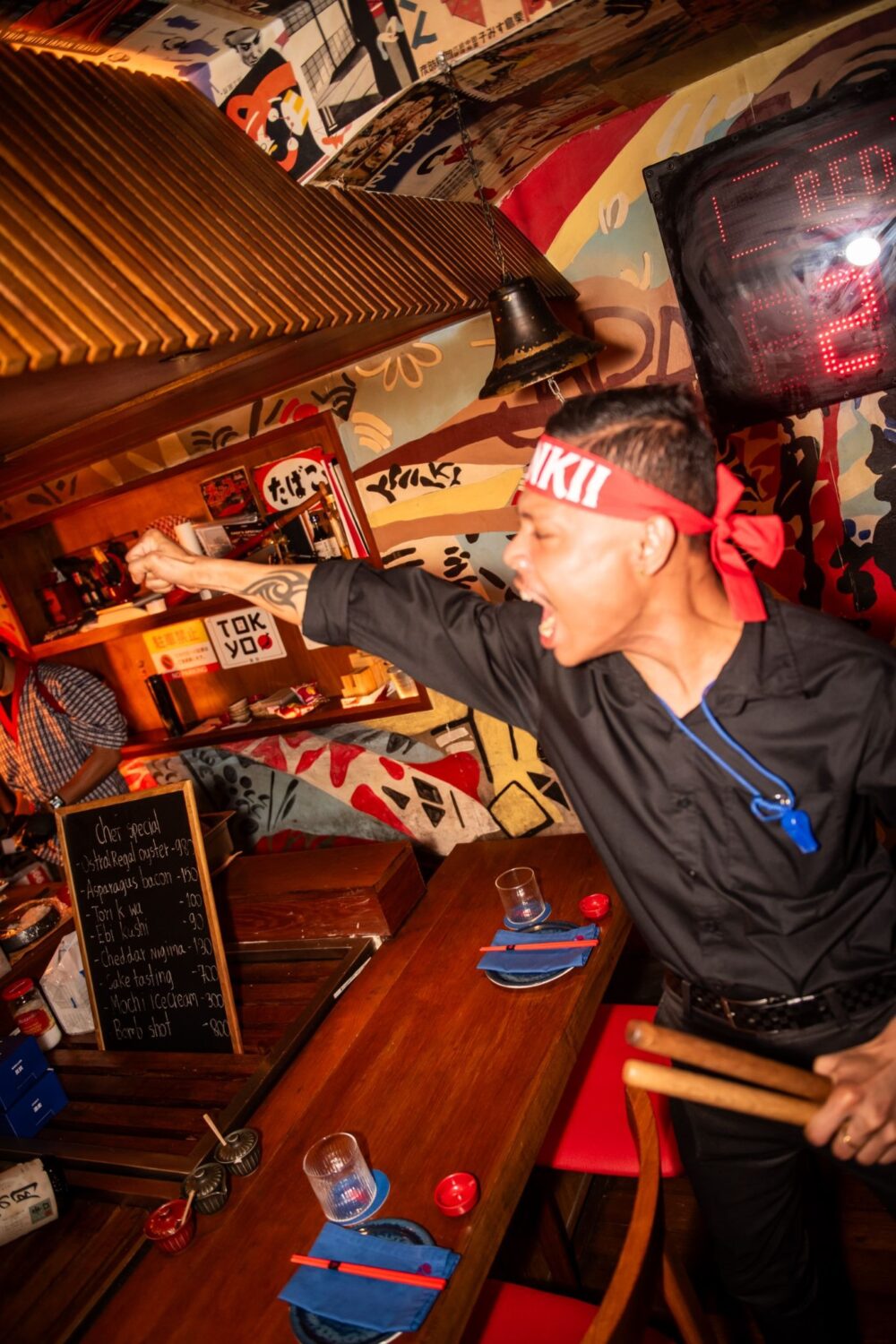
Interior design is only one dimension of the Yankii experience. The concept calls for an atmosphere that is loud in every sense, the music is hip-hop influenced, high-energy, and deliberately non-traditional. The service style mirrors the rebellious hospitality of the best Tokyo izakayas: knowledgeable, warm, and completely unstuffy.
This is a restaurant where it’s acceptable, encouraged, to be having a genuinely good time. Where the chef grilling at the robata counter is as much performer as craftsperson. Where the sake arrives with attitude.
The energy extends beyond the food and service into playful moments of interaction and competition. Guests become part of the experience through the ongoing rivalry between the Red and Blue teams, with scoreboards tracking the action and creating a spirited sense of camaraderie. Bell-ringing moments signal rounds of shots, turning spontaneous celebrations into shared rituals and transforming an ordinary dinner into an entertainment-driven dining experience where the room itself feels alive.
Why Yankii Matters in Contemporary Restaurant Design
In a global hospitality landscape crowded with Japanese restaurant concepts, Yankii represents a genuinely different proposition. Rather than reaching for authenticity through minimalism and restraint, the dominant aesthetic language of high-end Japanese dining internationally, it finds authenticity in abundance, personality, and cultural specificity.
The Dagashi bar and Robatayaki format is not new. What is new is the conviction that Japanese culture contains multitudes, and that the rowdy, colourful, proudly excessive world of Yankii subculture deserves its seat at the table, literally.
For diners, the experience promises something that has become increasingly rare in the restaurant industry: genuine surprise. You cannot fully picture Yankii before you walk in. You cannot predict what you’re going to see on the ceiling, what the walls are going to tell you, or how the evening is going to feel when the lanterns are glowing and the robata is firing and the music is doing exactly what it shouldn’t be doing in a Japanese restaurant.
That unpredictability is the whole point. The Yankii always were.
Yankii is a concept by Soho Hospitality. Interiors developed in collaboration with the Soho Hospitality design team.
Photo Credits: Christopher O’Grady